


What Is Dated Home Decor and How to Refresh It Without Losing Vintage Charm
A room can be full of beautiful things and still feel stuck in another decade. The sofa may be comfortable, the lamps may work, and the wall color may have been popular for a reason. Yet something about the space feels tired, heavy, or oddly out of step with the way people live now.
That is the puzzle of dated home decor. It is not the same as vintage style, and it does not mean every older piece needs to go. In many of the best rooms, the most memorable element is old: a carved wood mirror, a worn leather chair, a brass floor lamp, a painted cabinet, or a marble-topped table passed down through the family.
The real challenge is knowing the difference between a room with character and a room that has not been edited in years.
Dated decor usually comes from a combination of choices that once felt current but now read as frozen in time. Furniture shapes, lighting, color palettes, window treatments, finishes, and accessories all play a role. The good news is that small, thoughtful changes can make a space feel fresh without stripping away comfort or vintage charm.

What dated home decor really means
Dated home decor is decor that strongly signals a past trend rather than a personal, collected point of view. It often feels locked to a narrow period because too many elements come from the same era.
A room may feel dated because it has:
Matching furniture sets from one showroom collection
Heavy window treatments that block natural light
Wall colors that were once trendy but now dominate the room
Old lighting that casts flat or yellow light
Accessories arranged the same way for years
Finishes that fight the architecture of the home
Dated does not mean old. An antique chest from the 1800s can look stunning in a clean, modern room. A 1970s burl wood console can feel chic with the right art and lighting. A midcentury chair can look current when paired with a simple sofa and contemporary textiles.
By contrast, a room furnished entirely in new pieces can still look dated if every item follows a trend that has already peaked. Think of rooms where every surface is gray, every metal finish is the same, and every object looks like it came from one online cart. Newness alone does not create style.
Vintage is about age and character. Dated is about lack of freshness, proportion, and editing.
That distinction matters. It keeps homeowners from throwing out meaningful pieces that could become the soul of a better room.
The main elements that make a room feel outdated
Most rooms do not feel dated because of one bad lamp or one old chair. They feel dated because several choices reinforce the same stale message. The following elements have the biggest visual impact.
Furniture choices can freeze a room in time
Furniture sets are one of the clearest signs of an outdated room. A matching sofa, loveseat, chair, coffee table, end tables, and media cabinet can make a room look more like a store display than a lived-in home.
Scale also matters. Oversized recliners, bulky rolled-arm sofas, and massive entertainment centers can make a space feel heavy. On the other end, furniture that is too small can make a room feel temporary or awkward.
Common furniture choices that read as dated include:
Full matching bedroom or living room sets
Overstuffed seating with large pillow backs
Glass and chrome tables from a specific trend cycle
Dark espresso wood on every major piece
Tall media cabinets designed for older televisions
Dining sets with overly ornate chairs and heavy finishes
The fix is rarely to replace everything. A large traditional sofa can look calmer with cleaner pillows, a lighter rug, and a sculptural side table. A dark wood dining table can feel modern with simple chairs, updated lighting, and less formal styling.
Older furniture becomes an asset when it has good lines, solid construction, or a finish that adds warmth. The key is contrast. Pair heavy with light, ornate with simple, and old with new.
Lighting can make even good decor look tired
Lighting changes a room faster than almost anything else. Many dated spaces rely on one overhead fixture, old recessed cans, or lamps with yellowed shades. The result is flat light, dark corners, and a slightly gloomy feel.
Older fixtures can be beautiful, especially if they have a strong shape or quality material. A vintage Murano glass pendant, an antique brass chandelier, or a ceramic table lamp can anchor a room. The problem comes when lighting feels too small, too dim, too ornate, or out of sync with the room.
Watch for:
Flush mounts that look bland or builder-basic
Tiny chandeliers over large dining tables
Lamps with dated shades or bases
Cool bulbs in cozy rooms
Overly warm bulbs that make colors look muddy
No task lighting for reading, cooking, or working
Designers often think in layers. A comfortable room usually needs ambient lighting, task lighting, and accent lighting.
Ambient lighting fills the room. Task lighting supports specific activities. Accent lighting adds mood and highlights art, shelves, or architectural details. When those layers work together, even older furniture looks more intentional.
Color schemes can date a room instantly
Every decade has color habits. Tuscan golds, deep reds, chocolate browns, sage greens, cool grays, millennial pinks, and stark black-and-white palettes have all had strong moments. None of these colors are bad on their own. They become dated when the whole room is built around a trend with no relief.
A dated color scheme often feels one-note. It may have too much beige, too much gray, too much brown, or too many high-contrast colors fighting for attention.
Signs the palette needs a refresh include:
Walls, floors, furniture, and rugs all in similar dark tones
Gray walls paired with gray floors, gray sofas, and chrome accents
Multiple accent colors used in equal strength
Strong wall colors that make furnishings look older than they are
Wood tones that clash rather than relate
A modern color scheme does not have to be white or minimal. Warm neutrals, muddy blues, earthy greens, tobacco browns, oxblood, cream, plaster pink, and soft black can all feel current when used with restraint.
The goal is to make the room feel connected to the present while still honoring the home’s age and personality.

How to tell if your decor is dated or just vintage
It can be hard to judge your own home because familiarity hides problems. A room may feel normal simply because it has looked the same for a long time.
Start by looking at the space with distance. Take photos from each corner of the room during the day. Then take photos at night with the lights on. Photos flatten the space and reveal patterns you may miss in person.
Ask these questions as you review the images.
Does the room look like it came from one year?
A vintage room feels layered. It may include a 1930s mirror, a 1970s lamp, a new sofa, and contemporary art. A dated room often looks like most of it was purchased or renovated at the same time.
If every item points to the same decade, the room may need contrast.
Are the large pieces too similar?
Matching wood tones, matching fabrics, matching metal finishes, and matching silhouettes can make a room feel stiff. Rooms need variation to feel collected.
If the sofa, chairs, curtains, pillows, and rug all share the same color family and texture, the result may feel flat.
Do the window treatments make the room feel heavy?
Swags, thick valances, shiny fabrics, and puddled drapes can date a room quickly, especially if they block light. Some traditional window treatments are beautiful in historic homes, but they need the right scale, fabric, and setting.
Simple linen panels, woven shades, or tailored Roman shades often make a room feel cleaner without feeling cold.
Does the lighting flatter the room?
Turn on every light at night and look for dark corners, harsh shadows, and odd color casts. If the room feels more comfortable during the day than at night, lighting may be the main problem.
Updated shades, better bulbs, dimmers, and one new lamp can make old decor feel fresher.
Are there too many small accessories?
Small accessories can create visual noise. Figurines, tiny frames, faux floral arrangements, stacked trays, and scattered candles can make surfaces feel cluttered. Vintage objects look better when they have space around them.
Try removing half the accessories from a room for one week. The pieces that remain will look more important.
How to refresh a room without losing comfort
A refreshed room should still feel like home. It should support real life, not just look good in a photo. Comfort comes from seating that fits the way people sit, lighting that works at night, surfaces within reach, soft textures, and familiar pieces with meaning.
The best updates keep those comforts while changing the parts that make the room feel tired.
Start with subtraction before shopping
Remove anything that no longer serves the room. This includes extra pillows, dated art, faded faux plants, unused side tables, and accessories that fill space without adding personality.
A cleaner room gives you a better view of what actually needs attention. Sometimes a room looks dated because it has too much stuff, not because the main pieces are wrong.
Try this simple edit:
Clear every decorative item from tables, shelves, and mantels.
Put back only the pieces you would choose again today.
Group small items instead of spreading them across every surface.
Leave some empty space.
Live with the edit for a few days before buying anything new.
This step costs nothing and often changes the room more than expected.
Keep the most charming vintage pieces
Some older pieces deserve to stay because they add depth. The trick is to let them lead without letting them overwhelm the room.
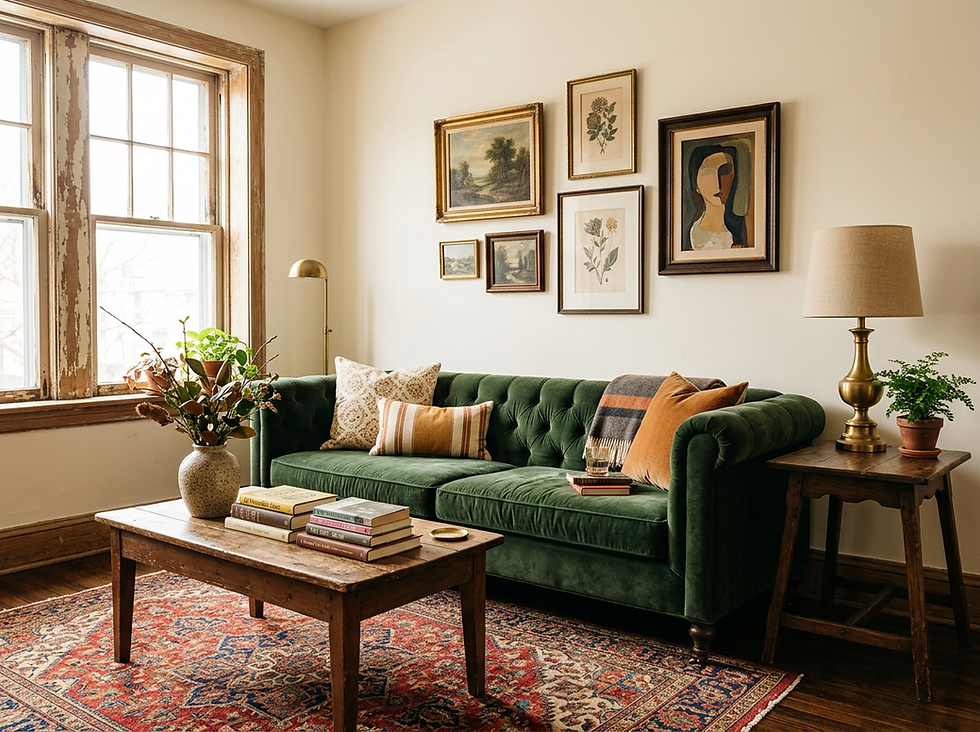
Vintage pieces that often enhance a space include:
Gilt or carved wood mirrors
Antique chests used as entry tables or bedside tables
Original oil paintings or framed sketches
Ceramic table lamps
Worn leather club chairs
Persian, Turkish, or wool rugs with faded color
Marble-topped tables
Cane, rattan, or rush-seat chairs
Brass candlesticks and picture lights
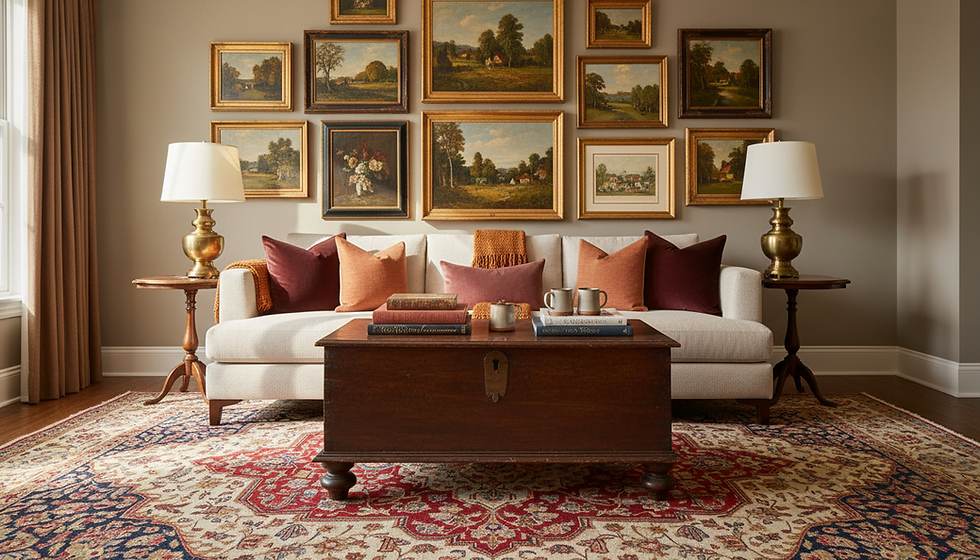
Old trunks used as coffee tables or blanket storage
A strong vintage piece usually has one of three qualities: shape, texture, or story. If it has all three, build around it.
Mix old and new in clear proportions
A room can handle a lot of vintage, but it needs balance. If every piece is old, the room can feel like a set. If every piece is new, it can feel impersonal.
A helpful approach is to choose one dominant mood, then add contrast. For example, a traditional room may need a clean-lined sofa and simple lamps. A modern room may need a vintage rug, an antique mirror, or a weathered cabinet.
Designers often use contrast in these pairings:
Ornate mirror
Skirted sofa
Dark antique chest
Vintage rug
Traditional dining table
Old portrait
Simple console
Modern glass or stone table
Pale wall color
Plain linen curtains
Clean-lined upholstered chairs
Minimal frame grouping
Contrast helps the eye understand that the vintage piece is a choice, not a leftover.
Update textiles for a faster refresh
Textiles carry a lot of visual weight. Pillows, curtains, rugs, throws, and upholstery can make a room feel current without major construction.
Swap shiny fabrics for natural textures. Linen, cotton, wool, velvet, bouclé, leather, and jute tend to age better than synthetic-looking sheens. Choose fewer pillows in better fabrics rather than many small pillows in busy patterns.
If the sofa is still comfortable but the fabric feels dated, consider a slipcover or reupholstery. For a smaller change, replace matching pillows with a mix of solids, stripes, checks, and one vintage textile.
Change the wall color with the furniture in mind
Paint is powerful, but it should respond to what stays in the room. A color that looks fresh in an empty space may clash with your rug, sofa, or wood tones.
Warm whites and soft neutrals can lighten heavy furniture. Earthy greens and muddy blues can make antiques feel rich. Plaster-like pinks and pale taupes can soften dark wood. Deep colors can work beautifully in small rooms with vintage art and brass lighting.
Before painting, test large swatches on more than one wall. Look at them in morning light, afternoon light, and evening lamplight.

Interior designer tricks for a modern yet cozy atmosphere
A modern cozy room has shape, warmth, and ease. It is edited but not empty. It has enough softness to relax and enough structure to feel intentional.
Designers use a few reliable tricks to create that balance.
Use one clean line for every ornate detail
If a room has carved wood furniture, traditional millwork, or an antique rug, add something simple nearby. A straight-arm sofa, a plain drum shade, a simple linen curtain, or a smooth ceramic lamp can calm the room.
The opposite also works. If the room has boxy modern furniture and plain walls, add one or two older pieces with patina.
Repeat materials in small ways
A vintage piece feels less random when its material appears elsewhere. If you have an antique brass mirror, add a brass picture light or a brass lamp. If you have a dark walnut chest, repeat that tone in a picture frame or side table.
Do not match everything. Just create a quiet echo.
Make the seating area feel grounded
Dated rooms often have furniture pushed against the walls. Pull seating inward if space allows. Place at least the front legs of sofas and chairs on the rug. Make sure tables are close enough to reach.
A room feels current when the layout supports conversation and daily use.
Choose fewer, larger accessories
Small decor can age a room fast. Designers often use fewer objects at a larger scale: one large bowl, one branch arrangement, one tall lamp, one stack of books, or one large framed work.
This makes a room feel calmer. It also gives vintage pieces more room to shine.
Add organic texture
Wood, stone, linen, wool, clay, rattan, and plants soften a room. These materials work with almost every style because they feel human and tactile.
Even a sleek room becomes warmer with a vintage wood stool, a woven shade, a nubby throw, or a handmade ceramic vase.
Use art to bridge eras
Art can make an older room feel personal rather than dated. A traditional landscape can look fresh in a simple frame. Abstract art can wake up antique furniture. Black-and-white photography can calm a colorful room.
Avoid choosing art only to match the sofa. Choose pieces that bring energy, memory, or contrast.
Budget-friendly steps for buying new pieces wisely
Refreshing a room can become expensive if every purchase is reactive. A lamp here, pillows there, a rug on sale, then a side table that does not fit. Soon the room has more stuff but no clearer direction.
Use a plan before spending.
Set a room budget and a priority list
Decide what you can spend before shopping. Then rank the room’s needs. Large functional problems should come before decorative extras.
A helpful order often looks like this:
Lighting that makes the room usable
Rug size or placement
Main seating comfort
Wall color
Window treatments
Accent tables
Pillows, art, and accessories
If the room feels dark, buy lamps before pillows. If the rug is too small, solve that before replacing art. A room improves faster when money goes to the biggest visual problem.
Shop secondhand with measurements
Secondhand shopping is one of the best ways to find quality on a budget, especially for wood furniture, mirrors, lamps, and dining chairs. Bring measurements and photos of your room. Know the maximum size for each piece.
Look for solid construction, pleasing shape, and repairable flaws. Scratches can often be fixed. Bad proportions cannot.
Good secondhand buys often include:
Wood dressers
Side tables
Framed mirrors
Ceramic and brass lamps
Dining chairs
Occasional chairs
Original art
Small cabinets
Be cautious with upholstered pieces unless you can inspect them well or plan to reupholster.
Spend more where touch and scale matter
Some items are worth a larger share of the budget because they affect comfort every day. Sofas, mattresses, dining chairs, and rugs usually deserve more thought.
Save on items that are easy to change later, such as pillows, small lamps, trays, and seasonal decor.
Avoid buying a full set
Full sets seem easy, but they can make a room feel dated quickly. Instead, buy pieces that relate without matching exactly.
For example, choose nightstands that share height but not the same finish. Pair a vintage dining table with newer chairs. Use two different side tables in a living room, as long as the heights work with the seating.
Refresh what you already own
Before replacing a piece, ask if it can be improved.
Try:
New lampshades
New cabinet hardware
Refinished wood
Painted frames
Slipcovers
Reupholstered chair seats
Trim removed from curtains
A new mat for old artwork
These changes keep useful pieces out of the landfill and help preserve the collected feeling of a home.
Examples of dated rooms and updated versions
Sometimes the easiest way to understand dated decor is to compare before and after choices. These examples are common in homes across the country.
Dated room | Updated version |
A living room with a matching brown sofa set, dark coffee table, small rug, and one overhead light | Keep the best sofa or chair, add a larger lighter rug, bring in two table lamps, replace matching pillows with textured neutrals, and add a vintage wood or stone accent table |
A dining room with a heavy cherry set, red walls, ornate chandelier, and formal drapes | Keep the table, paint the walls a warm neutral or muted green, use simpler upholstered chairs, hang a cleaner fixture, and replace heavy drapes with tailored panels |
A gray bedroom with gray floors, gray bedding, mirrored nightstands, and cool bulbs | Add warm white walls or creamy bedding, bring in wood or woven nightstands, use warmer bulbs, layer a wool throw, and add an antique mirror or vintage art |
A kitchen breakfast nook with Tuscan paint, iron scroll lighting, and dark faux finishes | Use a lighter wall color, change the pendant to a simple lantern or shade, add natural wood chairs, and style the table with ceramics instead of themed decor |
A family room with a bulky media cabinet, small art, and crowded shelves | Replace or simplify the media unit, group books by size, remove small filler objects, add one large artwork, and use baskets for storage |
These updates work because they do not erase the room’s comfort. They edit, lighten, rebalance, and add contrast.
Vintage pieces that make a room better
Not every old item earns its place. The best vintage pieces add soul while still working with daily life.
Here are some of the most useful vintage categories.
Antique mirrors add light and age
A mirror with foxed glass, carved wood, or a gilt frame can make a plain room feel layered. Place one above a mantel, over a console, or across from a window.
The trick is to avoid pairing an ornate mirror with too many ornate pieces nearby. Let it breathe.
Vintage rugs bring color without trendiness
Older wool rugs often have softened colors that work well with both modern and traditional furniture. A faded Persian-style rug can warm up a new sofa. A flatweave can make a room feel casual and collected.
Check size before buying. A rug that is too small can make the whole room feel off.
Old wood furniture adds warmth
A vintage dresser, chest, or cabinet can work in almost any room. Use one as a bar, entry table, linen cabinet, TV stand, or bedside piece.
Dark wood looks best when balanced with pale walls, lighter textiles, or modern lighting.
Vintage lighting creates personality
Ceramic lamps, brass sconces, milk glass pendants, and antique chandeliers can make a room feel special. Rewiring may be needed for safety, so factor that into the budget.
A new shade can completely change an old lamp. Choose simple linen, paper, or pleated shades to keep the look fresh.
Collected art gives the room a point of view
Vintage paintings, drawings, maps, and framed textiles can add character fast. Mix them with newer work so the room does not feel themed.
A single large artwork often looks more current than many small pieces scattered around the room.

Famous rooms show how antiques can feel fresh
Some of the most admired interiors prove that antiques do not have to make a room feel old-fashioned. They often make rooms feel more alive.
Jacqueline Kennedy’s White House restoration is one of the best-known American examples. The project brought historic furnishings, antiques, and a stronger sense of continuity back into public rooms. The lesson still applies at home: older pieces feel powerful when they connect to architecture, history, and purpose.
Nancy Lancaster’s famous Yellow Room, associated with the English country house look, showed how antiques, comfortable upholstery, warm color, and relaxed arrangement could create a room that felt elegant but livable. It remains influential because it values comfort as much as pedigree.
Designer Elsie de Wolfe helped popularize lighter, brighter interiors in the early 20th century. Her work often mixed painted furniture, antiques, mirrors, and softer colors in a way that felt fresh compared with the heavier Victorian rooms that came before.
Many contemporary designers also use antiques to keep rooms from feeling flat. Names such as Bunny Williams, Rose Tarlow, and Axel Vervoordt are often associated with interiors that mix age, texture, and restraint. Their rooms show a useful principle: antiques look best when they are part of a larger composition, not when they are treated like museum pieces.
The takeaway is simple. Antiques do not date a room by themselves. Poor balance does.
A practical plan to refresh one room this weekend
If a room feels dated and you do not know where to start, use a short weekend plan.
Friday evening
Take photos of the room from every angle. Make a quick list of what feels heavy, dark, cluttered, or mismatched. Choose three words for how you want the room to feel, such as warm, calm, and collected.
Saturday morning
Remove small accessories, extra pillows, tired throws, and anything that feels like filler. Clean the room well. Dust lampshades, wash windows, and vacuum the rug. A clean room is easier to judge.
Saturday afternoon
Rearrange furniture before buying anything. Pull seating off the walls if possible. Try a different side table. Move a vintage piece from another room. Test art in a new location.
Sunday morning
Assess lighting. Move lamps around. Change bulbs if the color feels harsh or yellow. Make a note of where a new lamp or shade would help.
Sunday afternoon
Buy only what solves a clear problem. That might be a larger lampshade, two pillow covers, a simple curtain rod, warmer bulbs, or a sample pot of paint. Keep receipts and avoid panic purchases.
This plan will not finish every room, but it will reveal what matters.
The best rooms feel edited, not erased
A dated room does not need to become a showroom. It does not need to lose its old mirror, family dresser, vintage rug, or favorite chair. In many cases, those are the pieces worth saving.
Start by identifying what makes the room feel stuck. Look at the furniture shapes, the lighting, the color scheme, the window treatments, and the amount of clutter. Then edit before you shop. Keep the vintage pieces with shape, texture, or story. Add contrast with cleaner lines, better lighting, fresher textiles, and a more balanced palette.
Spend where comfort matters. Save by updating what you already own. Buy slowly, measure carefully, and leave room for pieces that have history.
The goal is a home that feels current, comfortable, and personal. When vintage charm is used with intention, it does not make a room look dated. It makes the room worth remembering.

Comments