


Why the Collected Home Is Back for Fall 2026
The most inviting rooms this fall do not look freshly unboxed. They look lived in, layered, and slowly gathered over time.
For years, interiors leaned toward coordinated ease. Matching furniture sets, crisp neutral palettes, same-finish metals, and styled shelves made rooms feel tidy and camera-ready. That look still has a place, but Fall 2026 is bringing a warmer mood into focus. Homes are becoming more personal again. Dark woods are replacing pale sameness. Aged brass is outshining polished chrome. Burgundy, olive, tobacco, deep brown, and inky blue are giving rooms depth.
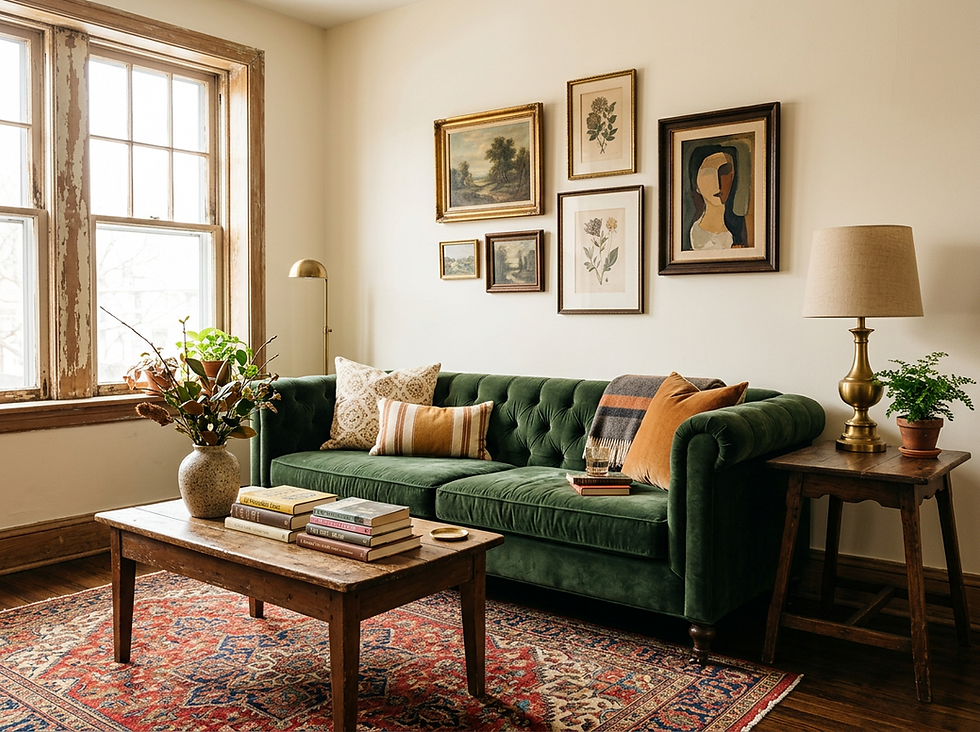
This is the return of the collected home, a style rooted in memory, craftsmanship, and contrast. It welcomes the antique chest next to the modern sofa, the oil portrait above the clean-lined console, the thrifted lamp on a contemporary side table. It values the pieces that carry a little mystery.
A collected room does not happen in one shopping trip. That is part of its charm.

The shift from coordinated rooms to collected spaces
The coordinated room promised control. Every finish matched. Every textile worked within a tight palette. Side tables came in pairs. Art often filled space rather than saying something. These rooms could be beautiful, especially when done well, but many began to feel a little too polished.
The collected space offers a different kind of beauty. It looks assembled through living rather than installed all at once. It might include a new sectional, a nineteenth-century pine cupboard, a 1970s ceramic lamp, a flea market landscape painting, and striped linen pillows. The pieces do not match in the strict sense. They relate through tone, texture, scale, and feeling.
That shift speaks to a larger craving in interiors. After years of fast trends and look-alike rooms, many people want homes that feel specific. A collected home shows evidence of taste, travel, family, local finds, and patience. It allows a room to say, “Someone lives here,” not just “Someone decorated this.”
Fall makes that longing stronger. Cooler weather draws attention indoors. Rooms need to feel restful, warm, and ready for slow evenings. Vintage and antique pieces naturally bring those qualities because they have patina, weight, and imperfection.
A new table can be beautiful. An old table with rubbed edges, visible grain, and a few marks from another lifetime does something else. It gives the room a sense of history.
Why vintage and antiques feel especially right for Fall 2026
Fall 2026 interiors are moving toward richer color, touchable surfaces, and design choices that feel emotionally grounded. Vintage and antique pieces fit this moment because they bring depth without trying too hard.
Dark wood is one of the clearest signs of the shift. Walnut, mahogany, oak, cherry, and stained pine have a visual weight that paler woods do not. They ground a room instantly. A dark wood sideboard against a plaster wall, a turned-leg table in a breakfast nook, or a carved chair tucked into a corner can make a space feel settled.
Aged brass also has a strong place in this look. It brings warmth without the glare of high-polish metal. Think brass candlesticks with small dents, picture lights with a soft glow, old drawer pulls, or a floor lamp with a mellow finish. Aged brass pairs well with burgundy, forest green, chocolate brown, cream, and ocher, the colors that make fall rooms feel so inviting.
Burgundy deserves special mention. It is elegant but not stiff, rich but not loud. A burgundy velvet pillow, leather chair, patterned rug, or lampshade can change the whole feeling of a room. In a collected space, burgundy works best when it is balanced by natural materials, dark woods, woven textures, and quiet neutrals.
The fall look is not only about color. Layered texture is what makes the collected home feel complete. Velvet, wool, linen, leather, cane, marble, iron, paper, and glazed ceramic all absorb and reflect light differently. When these materials sit together, a room feels deeper and more human.
A collected fall room might include:
A wool rug with faded red and navy tones
A skirted linen table beside a sculptural modern chair
A dark walnut cabinet filled with books and pottery
A brass lamp with a pleated fabric shade
An antique mirror that reflects candlelight
A contemporary sofa softened with vintage textile pillows
The mix matters. Too many antiques can make a home feel like a period set. Too many new pieces can make it feel flat. The strongest rooms balance the two.
The history behind the collected home
The idea of a collected home is not new. Before mass-produced furniture and one-click decorating, rooms grew slowly. Families inherited pieces, commissioned others, repaired what they had, and added objects as life changed. A home often contained several eras at once.
In older European and American interiors, it was common to see a practical mix of styles. A farmhouse table might sit under a formal portrait. A Victorian chair could live beside a simple Shaker chest. A handmade quilt might rest on an iron bed. Rooms evolved through use, not through a single design plan.
The collected look also has roots in the cabinet of curiosities, the tradition of displaying natural objects, art, books, scientific tools, and souvenirs in the home. While those early collections often reflected wealth and world travel, the design idea still resonates. Objects gain meaning when they reveal curiosity.
The English country house style also shaped the modern idea of layered living. These interiors often combined inherited furniture, worn rugs, botanical prints, slipcovered seating, books, dogs, muddy boots, and old portraits. The appeal came from comfort and continuity rather than perfection.
American interiors have their own collected traditions. New England homes, Southern antiques, Arts and Crafts bungalows, midcentury ranch houses, and urban apartments have all made room for mixed eras. A quilt from one generation, a campaign chest from an antique mall, a modern pendant light, framed family photographs, and a thrifted ceramic bowl can live together without needing to share an origin story.
That history explains why the collected home feels cozy. It connects the present to the past. It suggests care, memory, and repeated use. Even when everything in the room was found recently, vintage and antique pieces make a room feel less temporary.

Key pieces that create the collected home look
A collected home is built through careful choices, not random accumulation. The goal is not to fill every corner with old things. The goal is to choose pieces that add character, function, and warmth.
Furniture with age and weight
Furniture sets are fading in favor of rooms with varied silhouettes. Look for pieces that bring contrast to newer furnishings.
Strong choices include:
Dark wood sideboards
A sideboard works in a dining room, entry, living room, or bedroom. It adds storage and gives lamps, art, books, or bowls a place to land.
Antique chests
A small chest can serve as a nightstand, entry piece, or living room accent. Look for dovetail joints, solid wood, and drawers that move smoothly.
Gateleg and drop-leaf tables
These are useful in smaller homes because they expand when needed. They also bring beautiful old-world lines.
Cane or rush-seat chairs
These add texture without visual heaviness. Mix one or two with upholstered pieces for contrast.
Vintage leather chairs
Worn brown leather feels especially right for fall. Pair it with a modern floor lamp or a clean-lined sofa.
Demilune tables
Their curved shape softens hallways, entries, and awkward corners.
Trunks and blanket chests
They bring storage and history. Use one at the foot of a bed or as a coffee table with a tray on top.
When mixing furniture, pay attention to scale. A delicate antique table can disappear beside an oversized sofa. A heavy armoire can overwhelm a small room. Let one or two older pieces anchor the room, then allow lighter pieces to balance them.
Artwork that feels found, not generic
Art is one of the fastest ways to make a room feel collected. Vintage art does not need to be valuable to be meaningful. Look for pieces that draw you in.
Good options include:
Small oil landscapes
Charcoal figure studies
Botanical prints
Framed maps
Needlepoint or crewelwork
Vintage portraits
Black-and-white photography
Etchings and architectural drawings
A gallery wall can feel collected when frames vary slightly. Mix wood, gilt, black, and brass finishes, but keep spacing intentional. If the art itself is colorful, use simpler frames. If the art is quiet, a more ornate frame can add presence.
One large antique painting can also do the work of several smaller pieces. Hang it over a modern sofa or above a clean console table to create tension between old and new.
Textiles with pattern and touch
Textiles soften the collected home and help it shift with the seasons. For fall, look for heavier fabrics and richer patterns.
Try:
Wool plaid throws
Velvet pillows in burgundy, olive, rust, or brown
Block-print linen pillows
Tapestry cushions
Persian-style rugs
Turkish kilims
Checked table linens
Embroidered runners
Heavy cotton quilts
Pillows are a low-risk place to bring in antique and vintage textiles. A fragment of old fabric can become a pillow cover. A vintage rug can be cut and backed for a bench cushion. Old linen napkins can be used on side tables or trays.
Layering matters here. A neutral sofa becomes more interesting with a mix of velvet, stripe, block print, and woven texture. Keep the palette tight enough to feel calm. Burgundy, cream, olive, and tobacco make a strong fall combination.
Accessories that tell the room’s story
Accessories can make a collected room sing, or they can make it feel cluttered. Choose objects with shape, material, and purpose.
Look for:
Brass candlesticks
Ceramic pitchers
Stoneware bowls
Woven baskets
Marble bookends
Wooden boxes
Silver trays
Old books
Glass decanters
Framed miniatures
Ironstone plates
Cloisonné or lacquer boxes
Tole trays
Table lamps with pleated shades
Books are especially useful. They bring color, height, and personality. Stack them under a lamp, line them on shelves, or place a few on a coffee table with a dish or small vase.
Lamps also deserve attention. A vintage lamp can change the whole room. Look for ceramic, brass, alabaster, wood, or glass bases. If the wiring is questionable, have it checked or rewired by a professional. A new shade can make an old lamp feel fresh.

How to source vintage and antique pieces well
The collected look takes time because the best pieces are rarely found all at once. Sourcing is part of the pleasure. It also helps avoid a room that looks copied from a catalog.
Shop thrift stores with a focused list
Thrift stores can be overwhelming. Go in with categories rather than a rigid wish list. For example, look for brass, art, lamps, frames, baskets, and small wood furniture. These items often offer the best value.
Check condition before you buy. Open drawers. Look under tables. Smell upholstery. Test lamp switches if the store allows it. Small scratches can add charm. Bad odors, major structural damage, and active pests are not worth the trouble.
The best thrift finds often look unimpressive at first glance. A lamp with an ugly shade may have a beautiful base. A dark painting may shine once cleaned and reframed. A plain chair may become special with new fabric.
Visit estate sales early and late
Estate sales are ideal for finding pieces that lived together in a real home. That means the objects already have the layered quality collected interiors need.
Go early if you want the best selection. Go late if you want better prices. Bring measurements for spaces you need to fill, along with photos of your rooms. It is easy to fall for a beautiful chest that is too large for the wall you had in mind.
Look beyond the main rooms. Basements, garages, linen closets, and guest rooms often hold the best overlooked finds. Search for quilts, frames, lamps, garden pots, mirrors, small tables, and serving pieces.
Ask about pickup rules before buying furniture. Some sales require same-day removal. Others allow scheduled pickup. Bring blankets, straps, and a vehicle plan if you are hunting for larger pieces.
Use antique malls for comparison
Antique malls make it easier to train your eye. Because many vendors sell under one roof, you can compare styles, eras, condition, and prices in person. This helps you understand what you truly like.
Walk the whole mall before buying. If you keep noticing the same material or shape, that is useful information. Maybe you love barley-twist legs, gilt frames, ironstone, transferware, or campaign-style hardware. Pattern recognition builds personal style.
Do not rush. Take photos, note booth numbers, and circle back. If a piece still feels right after walking away, it may belong in your home.
Know when to buy and when to wait
A collected home rewards patience. Buy when a piece meets several of these points:
It fits a real need
It works with your home’s palette
It has good scale
It is well made
It can move between rooms
It makes the room feel more personal
You would still like it if trends changed
Wait when a piece is only appealing because it is cheap. Bargain mistakes can fill a home faster than thoughtful purchases. Empty space is better than filler.
How to mix modern pieces with vintage and antiques
The best collected rooms have tension. They combine clean with ornate, soft with structured, old with new. That contrast keeps vintage and antique pieces from feeling dusty.
A contemporary sofa is often the perfect foundation. Choose a simple shape in linen, cotton, wool, or performance fabric. Then add a vintage rug, antique side tables, and older art. The sofa keeps the room livable, while the vintage pieces bring soul.
In a dining room, try a modern table with antique chairs, or the reverse. A sleek oval table can look beautiful with cane-back chairs. A scratched farmhouse table can feel fresh under a sculptural pendant light.
In bedrooms, mix an upholstered modern bed with antique nightstands. Or use a dark wood bed with crisp contemporary bedding. Add a vintage quilt folded at the foot for color and history.
Lighting is another place to blend eras. A modern plaster chandelier can work above an antique dining table. A vintage brass lamp can warm up a minimalist console. Picture lights over older art add a soft, museum-like glow without feeling formal.
Use repetition to make the mix feel intentional. Repeat wood tones, metal finishes, or colors in small ways. If one aged brass lamp sits alone, it may look accidental. If aged brass appears again in a frame, candlestick, or drawer pull, the room feels connected.
A helpful rule is to mix at least three eras when possible. For example, a 1930s dresser, a 1970s lamp, and a current mirror can feel more natural than a strict pairing of one old item and one new item. The room becomes layered rather than themed.
Building a collected fall palette
Fall color does not have to mean pumpkins and orange leaves. The collected home favors richer, quieter shades that carry beyond one season.
Consider a palette built around:
Burgundy
Olive green
Navy
Ocher
Deep brown
Tobacco leather
Walnut
Charcoal
Cream
Aged brass
Warm white
Antique gold
Burgundy works well in pillows, lampshades, art, rugs, and upholstery. Olive green looks beautiful on walls, cabinets, or velvet chairs. Tobacco leather adds warmth without feeling seasonal. Cream keeps the darker tones from becoming heavy.
Dark wood is the anchor. If a room feels too pale, add a walnut side table, oak cabinet, antique mirror, or wood-framed art. If it feels too dark, add warm white lampshades, linen curtains, and lighter ceramics.
Paint can also support the collected look. Warm whites, mushroom, deep green, muted plum, brown-black, and soft ocher all pair well with antiques. A small room, such as a powder room or study, can handle a darker shade. The result feels enveloping rather than cramped when paired with good lighting.
How the collected fall home changes through the seasons
One of the best parts of a collected home is its flexibility. Because the foundation is not tied to one trend or one season, it can shift through the year with small changes.
Winter becomes richer and softer
In winter, keep the dark woods, brass, and burgundy. Add heavier layers.
Bring out:
Wool blankets
Taper candles
Plaid pillows
Deeper lampshades
Evergreen branches
Silver or mercury glass accents
Heavier quilts
Vintage pieces shine in winter because they already feel cozy. A carved chair near the fire, a brass tray with candles, or a stack of old books on a side table feels natural during the darkest months.
Spring can feel lighter without starting over
Spring does not require removing the collected foundation. Instead, lighten the textiles and add fresher colors.
Swap velvet pillows for linen or cotton. Replace deep burgundy accents with soft rose, faded blue, celadon, or warm cream. Bring in botanical prints, ceramic vases, and branches with early leaves.
Dark wood still works in spring when surrounded by lighter materials. A mahogany sideboard with a white ceramic lamp and a vase of tulips feels fresh without losing depth.
Summer asks for air and ease
In summer, edit the layers. Roll up a heavy rug if the room can handle bare floors. Store wool throws and bring out striped cotton, rattan, bamboo, and clear glass.
Use vintage baskets for beach towels or picnic blankets. Fill old pitchers with garden flowers. Let brass and dark wood stay, but give them breathing room.
The collected home transitions well because it is built on pieces with character rather than seasonal props. A good antique chest works in October, January, April, and July. The mood changes through textiles, flowers, light, and arrangement.

Why creating a collected look takes time
The collected home is slow by nature. That can feel frustrating in a culture used to instant room reveals, but time is what makes the look convincing.
A room gathered over months or years has better tension. Pieces come from different sources. Some are splurges. Some are lucky finds. Some are inherited, repaired, or repurposed. The mix develops naturally.
Start with anchor pieces. A sofa, dining table, bed, or storage cabinet gives the room function. Then add vintage and antique pieces in layers. Art, lighting, rugs, textiles, and accessories can come later.
Leave space for future finds. If every wall, corner, and tabletop is finished at once, there is no room for discovery. A collected home benefits from a little incompleteness. The missing piece gives you a reason to keep looking.
Curation also means editing. Not every charming object belongs in the room. If a piece does not serve the space, store it, move it, sell it, or pass it on. Collected does not mean crowded.
A useful test is to ask whether each piece adds one of four things:
Function
Texture
Color
Meaning
The strongest pieces often add more than one. A vintage trunk can store blankets, bring dark wood into the room, and add history. A burgundy wool rug can define the seating area, introduce color, and soften sound. An old painting can give the room a focal point and a sense of place.
The comfort of imperfection
Part of the cozy appeal of the collected home comes from imperfection. Scratches, fading, patina, and wear make a room feel less fragile. People can sit down. A book can be left open. A cup of tea can land on a tray. The room supports daily life.
Perfect rooms often make people behave carefully. Collected rooms invite ease. A worn leather chair does not require perfect posture. A vintage rug with a little fading does not panic over every footprint. A table with age can handle another mark.
That does not mean neglect. Well-kept antiques and vintage pieces need care. Wood may need conditioning. Upholstery may need cleaning. Old frames may need securing. Lamps may need rewiring. The point is to preserve character while making the pieces useful for modern life.
This balance is what makes the style so appealing now. People want beauty, but they also want comfort. They want homes that look good in photographs, but more than that, they want rooms that feel good at night with the lamps on.
Designed rooms and collected rooms are not the same
A designed room can be stunning. It may have perfect proportions, a clear palette, custom upholstery, and a polished finish. Designed rooms often bring order and ease because every choice supports a plan.
A collected room has a different kind of magnetism. It carries surprise. The eye moves from the modern sofa to the old portrait, from the brass lamp to the worn rug, from the antique chest to the handmade bowl. The room does not reveal itself all at once.
Designed rooms often answer every question immediately. Collected rooms leave room for curiosity.
The most memorable homes often combine both approaches. They use design principles, such as scale, balance, color, and rhythm, but they leave space for age, sentiment, and discovery. That is where the magic sits. A room can be thoughtfully arranged without feeling overly controlled.
For Fall 2026, that is the heart of the trend. Warmer interiors are not only about burgundy pillows or dark wood furniture. They are about homes that feel personal again. Rooms are becoming places to gather stories, not just furniture.
A collected home does not need to be expensive. It does not need rare antiques or perfect provenance. It needs patience, restraint, and an eye for pieces that bring warmth and meaning. Start with one good lamp, one old table, one framed landscape, or one wool rug. Let the room grow from there.
The charm of a collected space comes from the life it suggests. It feels layered because it is layered. It feels welcoming because it allows for imperfection. It feels timeless because no single year owns it. That is why vintage and antiques feel so right for fall, and why the collected home is back.


Comments