


How to Style Your Home Like a Pro Interior Stylist With Vintage Charm
A room can have good furniture, pretty colors, and still feel unfinished. That last layer is hard to name, but easy to feel. It is the reason one living room looks like a furniture showroom while another feels collected, personal, and quietly confident.
That is where styling comes in. Professional interior stylists know how to create rhythm, balance, and mood with the objects already in a space. Add vintage and antique pieces, and the room gains something new furniture rarely delivers right away: history, patina, and a sense of life.
Vintage styling does not mean turning your home into a period set. It means mixing old and new in a way that feels natural. A 1940s mirror above a clean-lined console. A worn pine bench in a crisp entry. A brass lamp on a modern nightstand. The charm comes from contrast, not from making everything match.

Know what each home professional actually does
Interior design terms get used loosely, which can make hiring help confusing. An interior designer, decorator, and stylist may all work with rooms, but they do not do the same job.
Role | What they usually focus on | Best for |
Interior designer | Space planning, layout, function, finishes, lighting plans, built-ins, and sometimes construction-related decisions | Renovations, remodels, new builds, kitchens, bathrooms, and rooms with layout problems |
Interior decorator | Furniture, color palettes, window treatments, rugs, lighting, and overall decorative schemes | Furnishing a room, refreshing a home, choosing paint, or creating a cohesive look |
Interior stylist | The final visual layer, including art, objects, books, textiles, vignettes, shelf styling, and mood | Making a room feel finished, photographed, welcoming, and personal |
An interior designer often works with structure and function. They may help decide where walls, electrical outlets, cabinetry, flooring, and lighting should go. In many states, the title can involve education, certification, or licensing, especially for commercial work.
An interior decorator usually focuses on what goes into the finished space. Paint colors, sofas, rugs, curtains, and lamps often fall into this category. A decorator can transform a room without changing its architecture.
An interior stylist brings the room to life. Styling is about placement, proportion, detail, and story. A stylist notices if a coffee table feels too bare, if a bookshelf looks overstuffed, if the art is hung too high, or if the entryway lacks a moment of welcome.
The best homes often need more than one of these skills. A room must function well, look cohesive, and feel lived in. When those layers work together, the result feels effortless.
Why a stylist decorator can be the ideal mix
A professional who combines decorating and styling skills can be especially useful for real homes. Many people do not need a full renovation. They need help making sense of what they own, identifying what is missing, and arranging it all with purpose.
A decorator-stylist can move between the big picture and the detail. They can choose a sofa size, then decide which textile softens it. They can recommend wallpaper, then style the antique mirror that sits against it. They can build a furniture plan, then make sure the side table holds more than a lonely lamp.
This kind of help is valuable because most rooms fail in the middle. The foundation may be fine, but the room lacks warmth. Or the decorative pieces may be beautiful, but the furniture layout does not support daily life.
A combined approach helps with:
Cohesion
The room feels connected from the rug to the art to the smallest object on a shelf.
Editing
A skilled eye can tell what should stay, what should move, and what needs breathing room.
Budget control
Using what already exists often reduces unnecessary buying.
Confidence
Vintage pieces can feel intimidating. A stylist decorator can make them feel easy and current.
Personality
The end result looks like a home, not a catalog page.
This is especially true with vintage and antique pieces. Older items rarely come in matching sets. They have odd dimensions, aged finishes, and strong personalities. That is exactly what makes them interesting, but it also means they need thoughtful placement.

Vintage and antique decorating is its own specialty
Decorating with vintage and antique pieces requires a different eye than decorating with new retail furniture. A vintage specialist understands age, scale, patina, provenance, and mix. They know how to spot a piece with character, and they know when a room has tipped from collected into crowded.
The terms matter here, too. “Vintage” usually refers to items that are older but not necessarily ancient. “Antique” often refers to items around 100 years old or more. In everyday decorating, the exact label matters less than quality, condition, and how the piece contributes to the room.
A vintage or antique decorator-stylist brings several unique skills to a project.
They can see value in overlooked pieces
A chipped stool, old trunk, framed needlepoint, brass candlestick, or inherited dresser may not look special in isolation. In the right place, it can become the piece that makes the room memorable.
Many homes already contain vintage pieces. They just may not be recognized that way. Look for:
Family furniture passed down through generations
Old mirrors with silvering or foxing
Brass, pewter, copper, or silver-plated objects
Handmade quilts, embroidered linens, or lace panels
Framed prints, oil paintings, sketches, or portraits
Wood stools, benches, trunks, and small tables
Dishes, pitchers, bowls, and serving pieces
Old books, boxes, baskets, and trays
The goal is not to display everything. The goal is to notice what carries feeling, texture, or craft.
They know how to mix eras
A room with all antiques can feel heavy. A room with all new pieces can feel flat. The magic usually happens in the mix.
Try pairing:
A clean-lined sofa with an antique coffee table
A modern bed with vintage nightstands
A new dining table with old ladder-back chairs
Contemporary art above a worn wood console
A simple linen shade on a vintage ceramic lamp
When eras mix, each piece has more room to shine. The older items bring soul. The newer items bring ease and function.
They understand repair, condition, and patina
Not every imperfection is a problem. A worn leather chair, a faded rug, or a table with marks can add warmth. At the same time, some issues affect safety or longevity. Loose joints, unstable wiring, moldy upholstery, or strong odors may need professional attention.
A skilled vintage stylist knows when to preserve, when to repair, and when to walk away.
Start with the mood before you move a single thing
Professional styling starts before the accessories come out. Good stylists ask what the room should feel like.
Calm and airy? Warm and layered? Formal and polished? Casual and collected? The mood should guide every choice.
Vintage styling works best when the room has one clear feeling. Without that, antique pieces can start competing with one another.
Before styling, walk through the room and ask:
What do I want to feel when I enter?
Which pieces already support that feeling?
Which pieces fight it?
What colors, textures, or shapes repeat in the room?
Where does the eye naturally land?
Choose one or two anchor words. “Soft and storied” will lead to different choices than “tailored and dramatic.” This simple step keeps vintage styling from becoming random.
Follow living room rules that leave space for character
The living room usually carries the most visual weight in a home. It is where furniture scale, comfort, lighting, and styling all meet. Vintage pieces can make it feel layered, but they need structure.
Create a real conversation area
A common mistake is pushing every piece to the edge of the room. The “furniture against the wall” rule is often misunderstood. It does not mean furniture can never touch a wall. It means a room usually feels better when at least some pieces come forward enough to create connection.
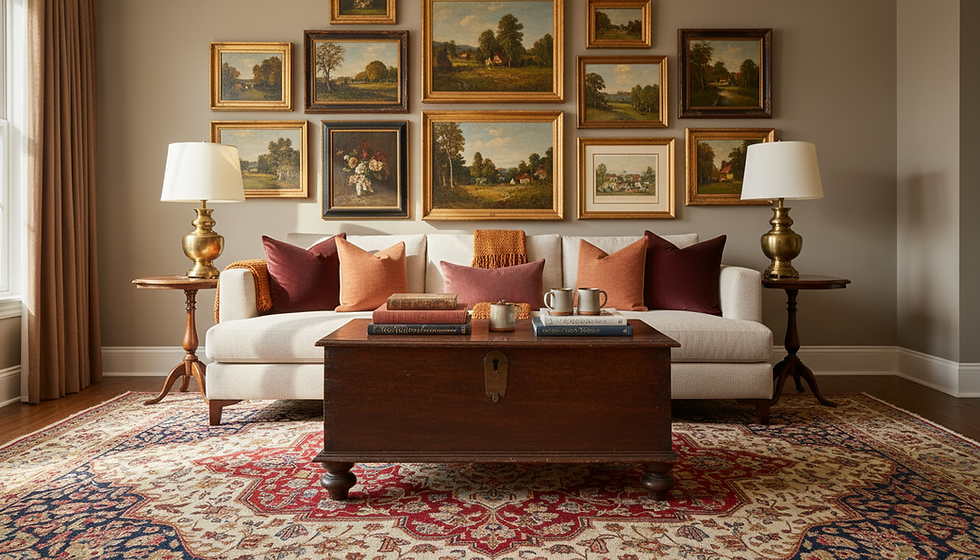
If the sofa must sit against a wall, pull chairs inward. Float a coffee table at the center. Use a rug large enough to connect the seating. A vintage rug, antique trunk, or weathered wood coffee table can become the anchor that pulls everything together.
In a large room, floating the sofa away from the wall can create a more intimate seating area. Place a narrow antique console behind it with a lamp, books, or a pair of old candlesticks. The back of the sofa becomes useful, not forgotten.
Give each vintage piece breathing room
One antique chest can feel elegant. Three dark wood antiques lined against one wall can feel like a storage unit. Space matters.
A good rule is to let one substantial vintage piece lead the room. It might be:
A carved cabinet
A farm table used as a coffee table
A painted armoire
A leather club chair
A large vintage mirror
A framed textile or oversized artwork
Then add smaller supporting pieces. Think brass, glass, ceramics, books, baskets, and textiles.
Style the coffee table with restraint
A coffee table should look inviting, not staged beyond use. Use three to five elements with varied height and texture.
Try this simple formula:
A tray or stack of books
One sculptural object
A small vessel with branches or flowers
A useful item, such as coasters or a lidded box
Vintage items are excellent here because they bring texture without trying too hard. A silver tray, old wooden bowl, small stoneware crock, or antique magnifying glass adds interest while staying useful.
Make bedrooms feel restful, not overly themed
A vintage bedroom should feel personal and soft. It should not feel like a museum or a movie set. The key is balance.
Let the bed stay simple
If you use antique nightstands, a vintage bench, patterned wallpaper, or ornate art, keep the bedding calmer. White, cream, oatmeal, soft blue, faded rose, or muted green all work well with older wood and aged metal.
Texture does more than pattern here. Linen, cotton matelassé, quilts, wool throws, and embroidered pillowcases can make a bed feel layered without making it busy.
Use vintage lighting for instant charm
Bedroom lighting is one of the easiest places to bring in character. A pair of vintage lamps can give plain nightstands a lift. They do not have to match, but they should relate in height, color, or material.
Always check wiring on older lamps. Rewiring is often worthwhile for a beautiful base, especially ceramic, brass, alabaster, or turned wood.
Bring in memory without creating clutter
Bedrooms tend to collect sentimental items. The trick is to choose the best ones and display them with intention.
Instead of scattering family photos, old letters, jewelry boxes, and keepsakes across every surface, group a few meaningful pieces on a tray or in a small frame cluster. One antique box on a dresser can hold many small things while still keeping the room calm.

Treat the entryway as the first styled moment
The entry sets the tone for the whole home. It also needs to work hard. Shoes, keys, coats, bags, mail, and guests all pass through this space.
Vintage pieces shine here because they create welcome without needing much square footage.
Choose one hardworking anchor
A narrow antique console, small dresser, church pew, painted bench, or vintage wall shelf can bring instant personality. If storage is needed, choose a piece with drawers or baskets below.
An old dresser in an entry can be more useful than a standard console. It can hold dog leashes, gloves, sunglasses, candles, and seasonal items. Add a tray on top for keys and a bowl for loose change or small everyday items.
Use mirrors and art with purpose
A vintage mirror near the entry reflects light and gives people a place to check themselves before leaving. Hang it at a practical height, not just where the wall happens to be empty.
Pair the mirror with one lamp or sconce, a small dish, and perhaps a vase. Stop there. Entryways get cluttered fast.
Add softness where possible
A vintage runner can make an entry feel warmer, especially in homes with wood or tile floors. Choose a pattern and color that can handle real life. Slight fading is often forgiving, and darker ground colors hide daily wear better than pale ones.
Use wall color, wallpaper, and fabric as the setting
Vintage styling is not only about objects. The walls and fabrics create the backdrop that makes older pieces feel intentional.
A beautiful antique chair can look lost against a harsh white wall. The same chair may glow against warm taupe, muddy green, smoky blue, plaster pink, or rich cream.
Choose wall colors with depth
Vintage pieces often have aged wood, tarnished metal, faded paper, and softened textiles. They usually look better with colors that have some complexity.
Consider shades such as:
Warm white instead of stark white
Mushroom or greige
Olive, sage, or moss
Deep blue-gray
Dusty rose or clay
Ochre, camel, or tobacco
Soft black or charcoal in small spaces
Paint changes how vintage items read. A dark dresser against a dark wall can feel elegant and quiet. A golden wood cabinet against pale cream can feel fresh and casual.
Let wallpaper add age and pattern
Wallpaper works beautifully with vintage styling because it brings pattern to the architecture of the room. Floral, stripe, grasscloth, block print, toile, and small-scale geometrics all pair well with antiques.
Use wallpaper in:
Powder rooms
Entryways
Bedrooms
Dining rooms
The back of built-ins
A single wall behind a bed
If a full room feels like too much, start small. Lining the back of a cupboard or bookshelf with wallpaper can make everyday objects feel curated.
Use fabric to connect old and new
Fabric can unite pieces from different eras. A modern sofa with a vintage floral pillow. An antique chair re-covered in a fresh stripe. Cafe curtains in a small vintage print. A new headboard dressed with an old quilt.
Repeat fabric colors in small ways. If a vintage rug has rust, cream, and blue, let one of those colors appear in pillows, lampshades, or artwork. Repetition makes the mix look deliberate.
Display vintage art without making the room feel crowded
Vintage art is one of the best ways to add character. It can also become clutter if every wall gets filled.
Art needs pauses. A blank wall or open stretch around a frame lets the piece matter more.
Mix frames, but keep one thread consistent
A gallery wall can include gilded frames, wood frames, black frames, and small unframed pieces. To keep it from looking messy, repeat one element.
That element might be:
Similar subject matter
A limited color palette
Matching mat color
Mostly landscapes
Mostly portraits
A consistent spacing between frames
Vintage art does not need to be expensive. Small oils, sketches, botanical prints, etchings, old maps, and framed textiles can all work. The key is choosing pieces that relate to the room.
Hang art at human height
Many people hang art too high. In most rooms, art feels better when the center sits near eye level. Above furniture, keep the art low enough to relate to what sits beneath it.
A small vintage painting floating too high above a sofa will look disconnected. Bring it closer to the furniture, then style a lamp, plant, or object nearby to create a complete composition.
Use shelves carefully
Open shelves can easily become a holding area for everything old and interesting. Edit hard.
A good shelf mix includes:
Books for weight and color
One or two framed pieces
A vessel or bowl
Something sculptural
Enough open space to see each object
Avoid lining small items in a row. Group them by height and shape. A cluster of three usually looks better than seven unrelated pieces marching across a shelf.
Fit vintage pieces into current home trends
Home trends change, but vintage pieces have a way of outlasting them. That is one reason they are so useful. They can make current styles feel warmer, and they can move with you when your taste shifts.
Warm minimalism needs patina
Warm minimalism favors calm rooms, natural materials, and fewer objects. Vintage pieces work well here because one aged piece can carry a lot of visual interest.
A single antique bench, weathered stool, or vintage clay pot can soften a spare room without adding clutter.
Traditional style feels fresher when it is mixed
Classic decorating has been gaining renewed attention in many homes, with pleated lampshades, skirted tables, pattern, trims, and darker wood making their way back into rooms. Vintage pieces fit naturally, but they need contrast to feel fresh.
Pair traditional items with cleaner shapes. A skirted table near a simple sofa. A vintage portrait in a room with modern lighting. An antique dresser with an unadorned mirror.
Earthy and natural interiors welcome age
Wood, stone, rattan, linen, clay, and iron all pair beautifully with vintage finds. These materials age well because they do not rely on a perfect finish.
A room filled with natural materials can start to feel too beige if every piece is new. Add a worn leather chair, old pine table, patterned vintage rug, or antique pottery, and the room gains depth.
Color-drenched rooms love old art and mirrors
Color-drenching, where walls, trim, and sometimes ceilings share the same or related colors, creates a rich backdrop. Vintage mirrors, gilt frames, old portraits, and dark wood furniture look especially good against saturated paint.
This approach can make antique pieces feel bold rather than fussy.
Quiet luxury becomes more personal with vintage
The polished, understated look often associated with quiet luxury can feel impersonal if every surface is too perfect. Vintage pieces add individuality. A timeworn side table or old landscape painting gives the room a sense of ownership and warmth.
Trends can guide, but they should not decide everything. A good vintage piece does not need to be trendy to work. If it has shape, quality, and meaning, it can adapt.

Edit like a stylist before buying anything new
The most professional-looking rooms are edited. That does not mean empty. It means every piece has a reason to be there.
Before shopping, try a full-room edit.
Remove small accessories from surfaces. Take down art that feels wrong. Clear the coffee table, mantel, nightstands, and entry console. Then add pieces back slowly.
Ask three questions with each item:
Does it add beauty, function, memory, or texture?
Does it relate to something else in the room?
Does the space look better with it than without it?
If the answer is no, move it. Not every piece needs to be discarded. Some items simply belong in another room.
Professional stylists also rotate. A heavy brass candlestick may feel right in fall and winter. A glass vase may feel lighter in spring. Vintage styling does not have to be fixed forever.
Shop your own home with a vintage eye
Many people buy more because they have stopped seeing what they own. Before searching estate sales or antique malls, walk through your home as if you were visiting it for the first time.
Open cabinets. Look in closets. Check the attic, basement, garage, and storage bins. Pull out objects that have shape, texture, age, or memory.
A serving bowl can become an entry catchall. A small stool can hold a plant. A quilt can live folded over the back of a sofa. A stack of old books can lift a lamp. A tray can gather perfume bottles on a dresser.
The most charming vintage details are often hiding in plain sight.
Try this exercise:
Gather ten older items from around the house.
Place them on a dining table.
Sort them by material, such as wood, metal, ceramic, glass, paper, or textile.
Choose three that share a color, finish, or feeling.
Style those three together in one room.
This trains the eye to see relationships. Styling is rarely about one perfect object. It is about the conversation between objects.
Use the rule of contrast
Vintage charm works best when there is contrast. Too much sameness makes a room feel flat.
Use contrast in these ways:
Old with new
A vintage mirror above a modern console.
Rough with smooth
A worn wood stool beside a sleek upholstered chair.
Light with dark
Pale walls with dark antique furniture.
Plain with patterned
Simple bedding with a vintage floral quilt.
Curved with straight
A round antique table near a square-lined sofa.
Contrast keeps vintage pieces from feeling dated. It gives them context.
Know when to stop
The easiest way to ruin vintage styling is to overfill the room. If everything is special, nothing gets attention.
Give the eye places to rest. Leave some surfaces mostly clear. Let one wall stay quiet. Place one large object where several small ones might otherwise gather.
A good room should have rhythm. Some areas can be layered and detailed. Others should be simple.
Think of a mantel. It may hold a vintage mirror, two candlesticks, and one vessel. That may be enough. Adding six small figurines, three frames, garland, and stacks of books could weaken the whole composition.
Editing is not about removing personality. It is how personality becomes visible.
A professional finish starts with better questions
Styling a home with vintage charm is not about copying a look. It starts with better questions.
What do you already own that deserves a second look? Which room feels unfinished, even though the main furniture is there? Do you want your home to feel calmer, warmer, more layered, more elegant, or more personal? Are you drawn to worn wood, old paintings, patterned textiles, brass, pottery, books, or family pieces with history?
A stylist decorator can help answer those questions in practical ways. They can shape the room, edit what is there, source what is missing, and style the final details so the space feels complete. That kind of refresh can change more than the room. It can shift how the whole home feels to live in.
Start with one surface, one corner, or one room. Pull out the pieces you have forgotten. Move furniture away from the wall if the room feels stiff. Hang the art a little lower. Add fabric, color, and texture. Then edit until the room feels like it has taken a deep breath.
That is the real beauty of vintage styling: it helps a home feel more like itself.


Comments